The helpers.work blog
Practical guides on DNS, networking and security — written for people who read RFCs for fun.
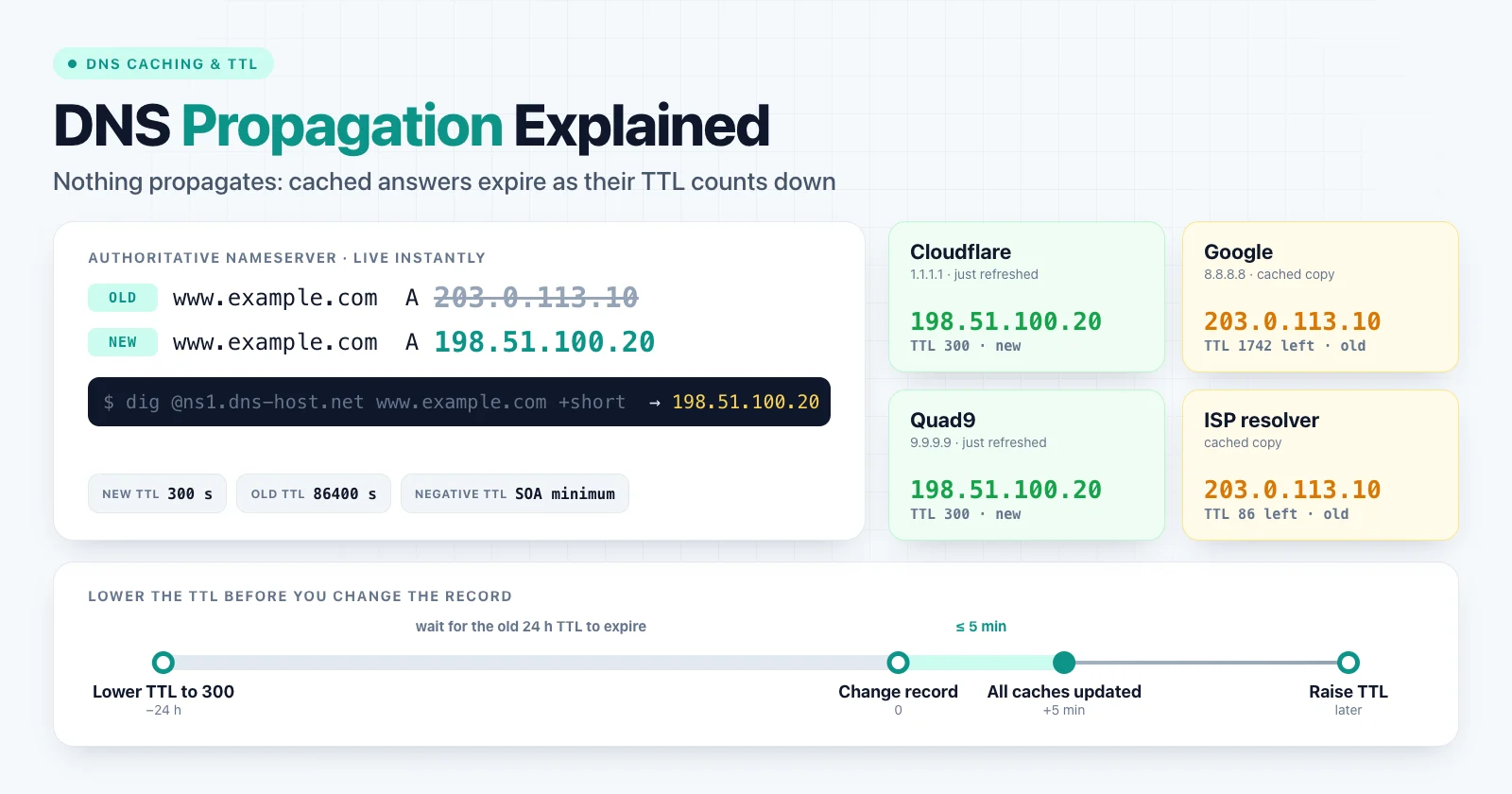
DNS Propagation Explained: Why DNS Changes Take Time and How to Check Them
Nothing actually propagates. How TTLs and caches decide when a DNS change is visible, and how to verify it properly.
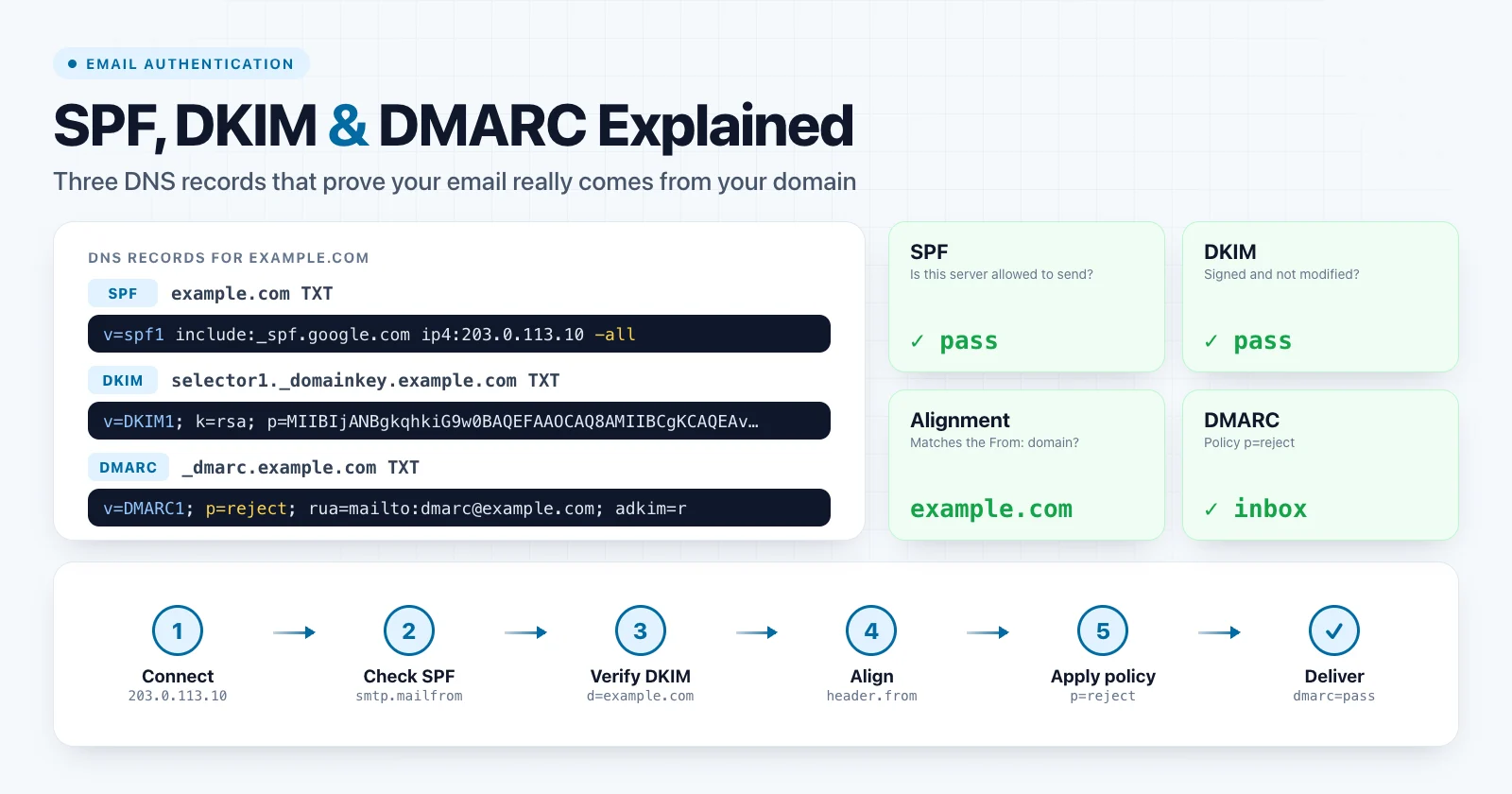
SPF, DKIM and DMARC Explained: How Email Authentication Works
The three DNS records that decide whether your email lands in the inbox, how they fit together, and how to fix them when they fail.
DNS & Email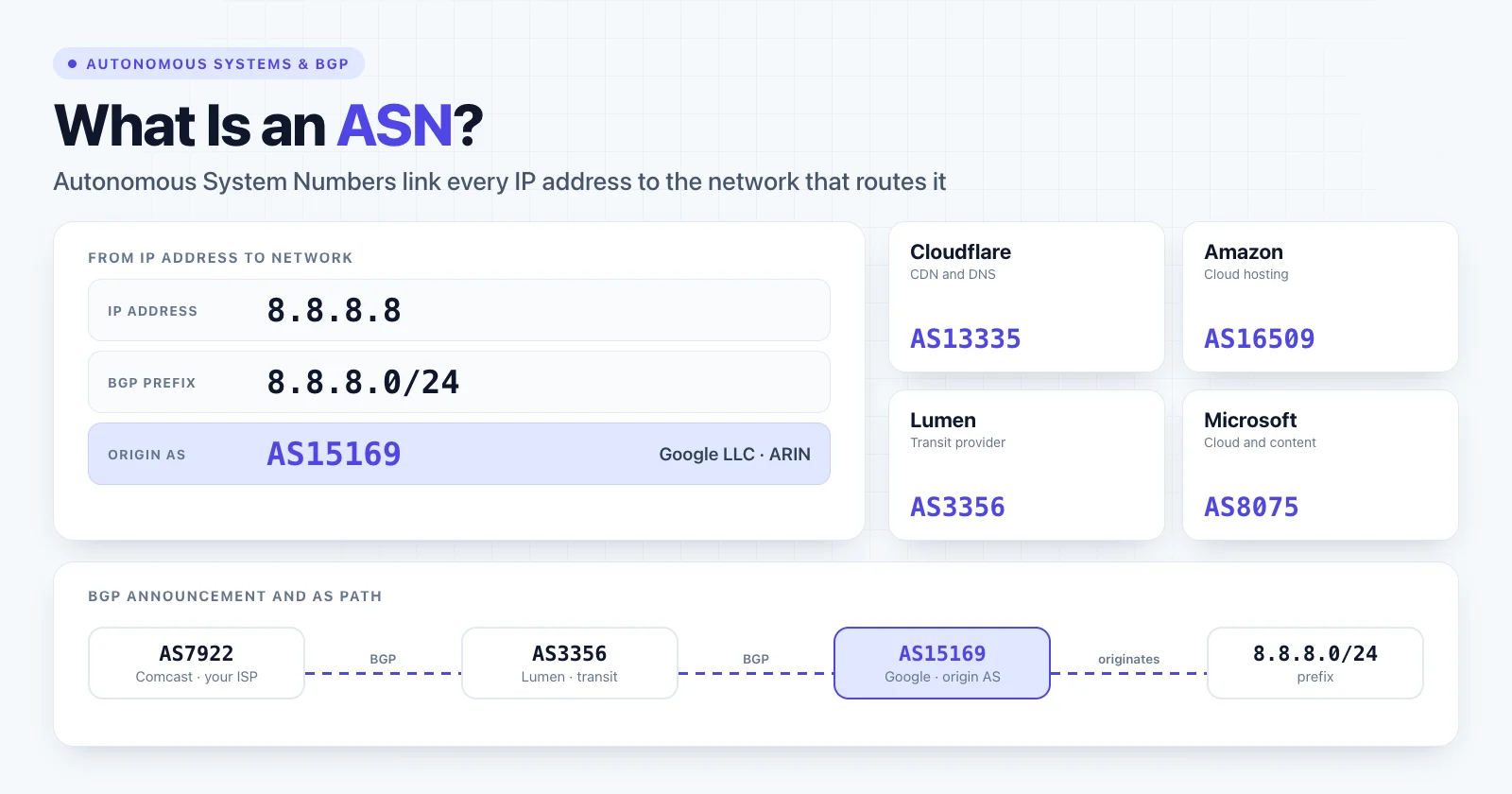
What Is an ASN? Autonomous System Numbers Explained
What autonomous system numbers are, how BGP uses them, and what an ASN tells you about the network behind any IP address.
IP & Network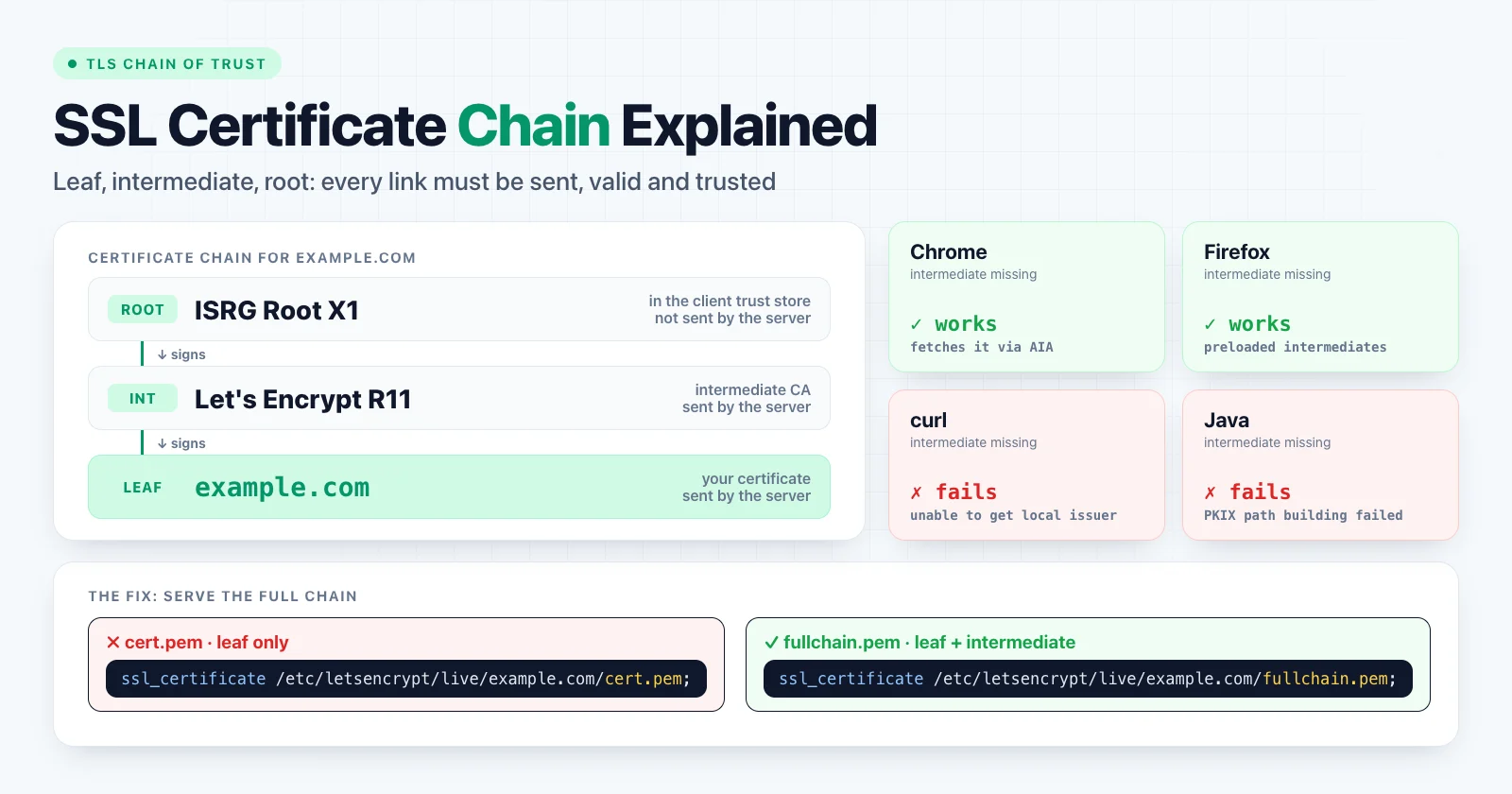
SSL Certificate Chain Explained: Root, Intermediate and Leaf Certificates
Root, intermediate and leaf certificates, what each link does, and how to fix "unable to get local issuer certificate".
Security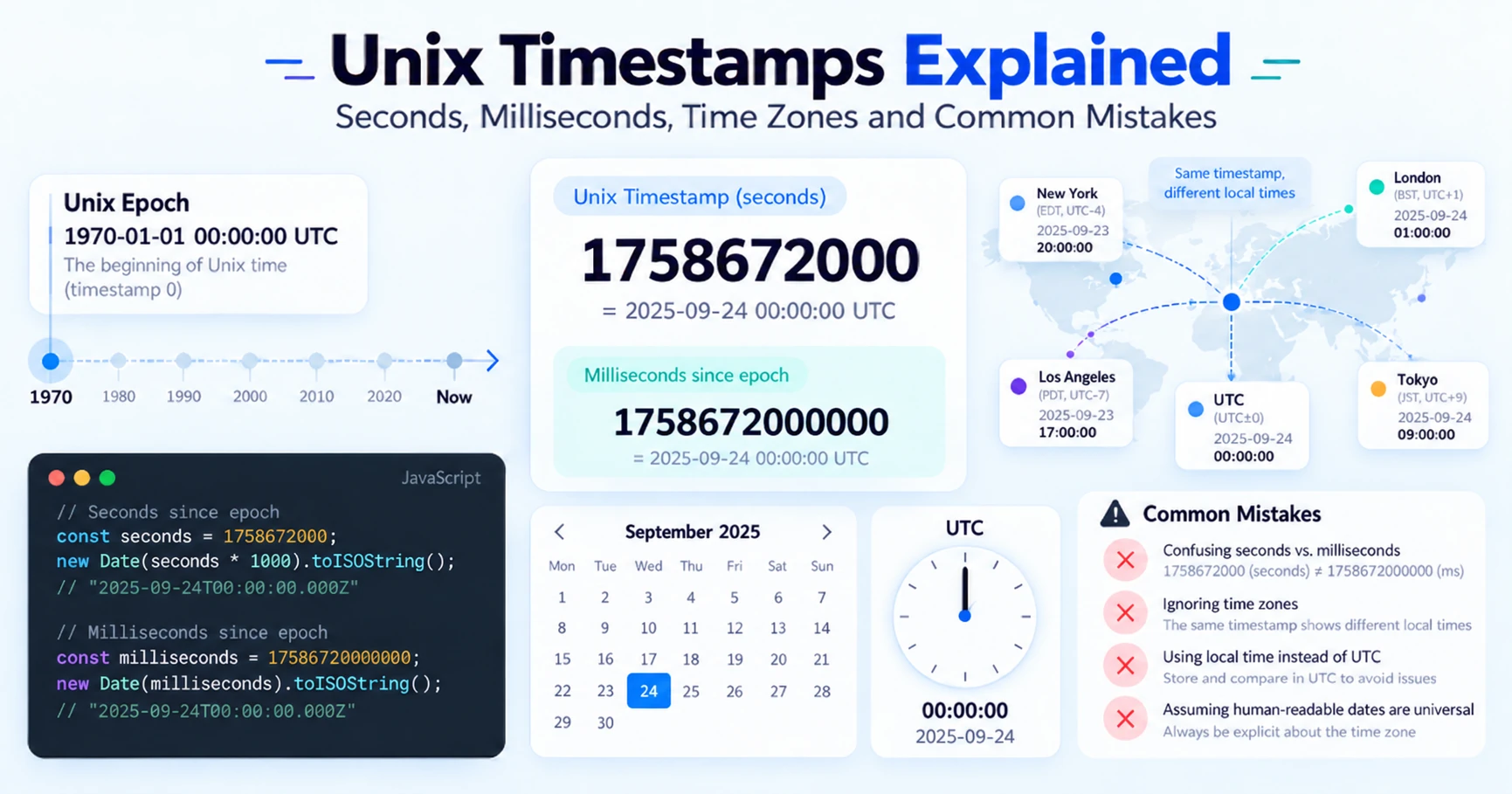
Unix Timestamps Explained: Seconds, Milliseconds, Time Zones and Common Mistakes
Seconds or milliseconds, UTC or local time — how Unix timestamps really work and the mistakes that cause date bugs.
Developer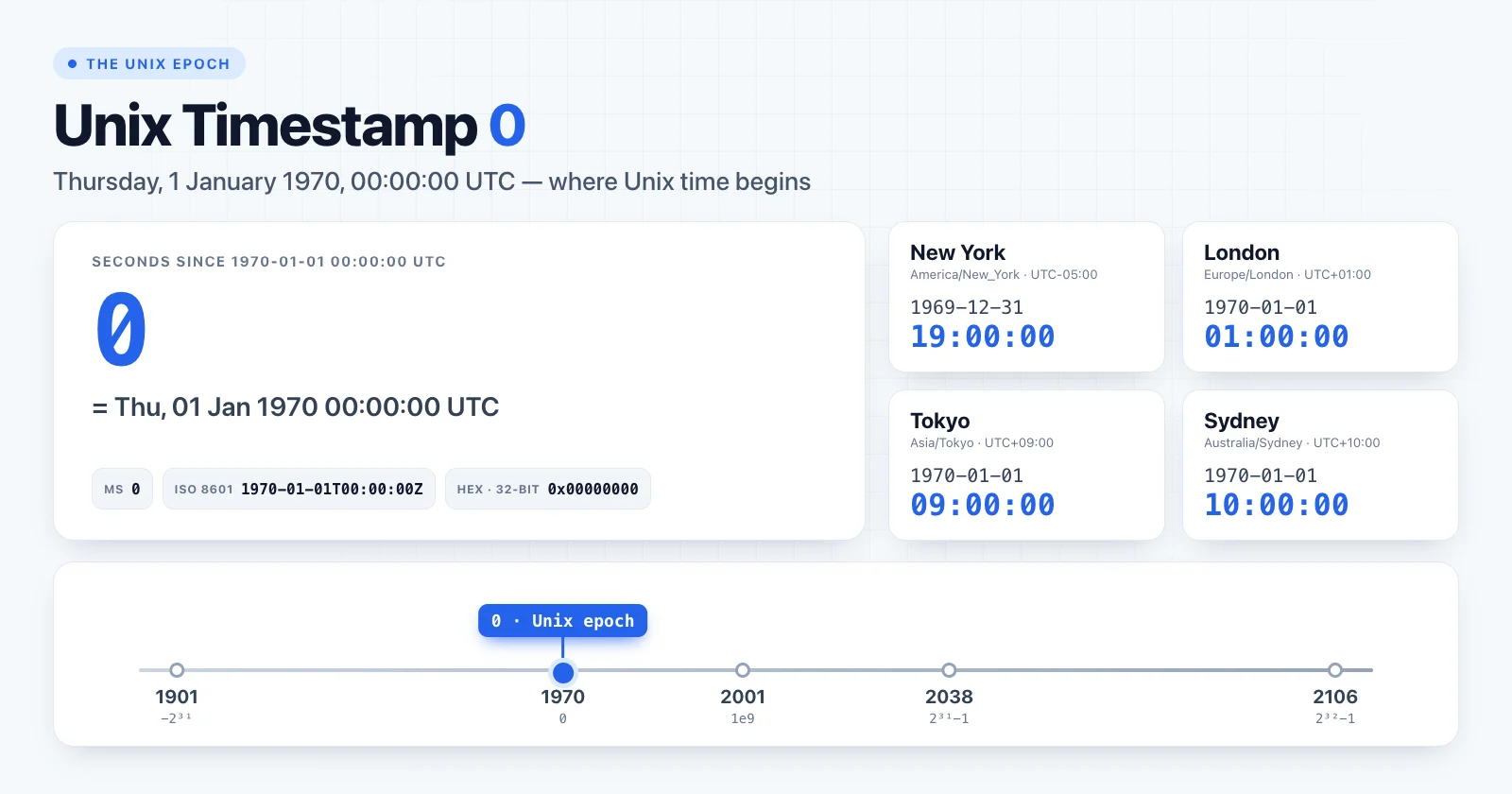
Unix Timestamp 0: The Unix Epoch and Why Dates Show 1970
Timestamp 0 is where Unix time begins. It is also the date you see when a null, a zero or a unit mix-up slips into your code.
Developer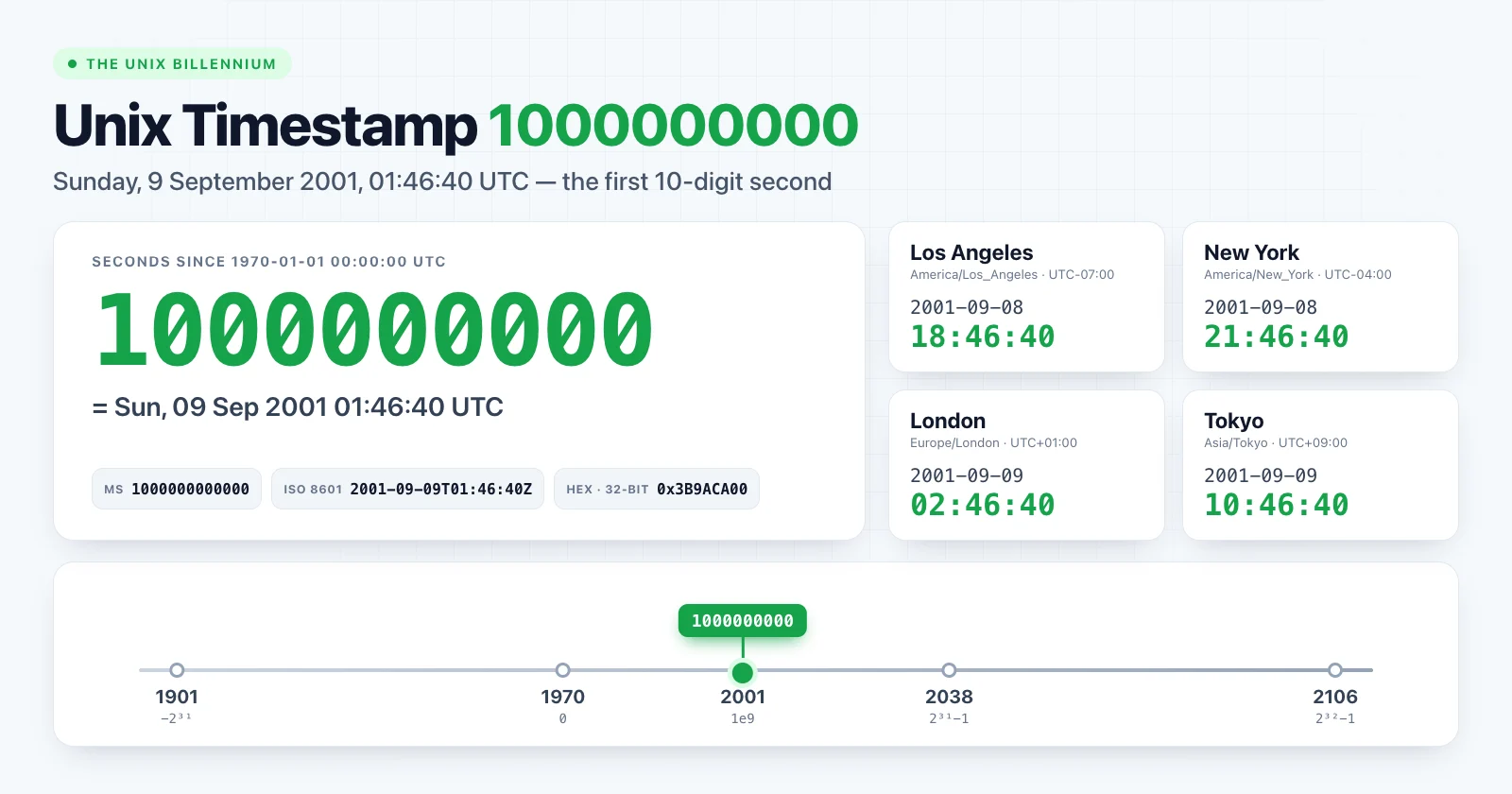
Unix Timestamp 1000000000: The 2001 Unix Billennium
One billion seconds after the epoch, Unix time gained its tenth digit. Here is what 1000000000 means and the bugs that digit change exposed.
Developer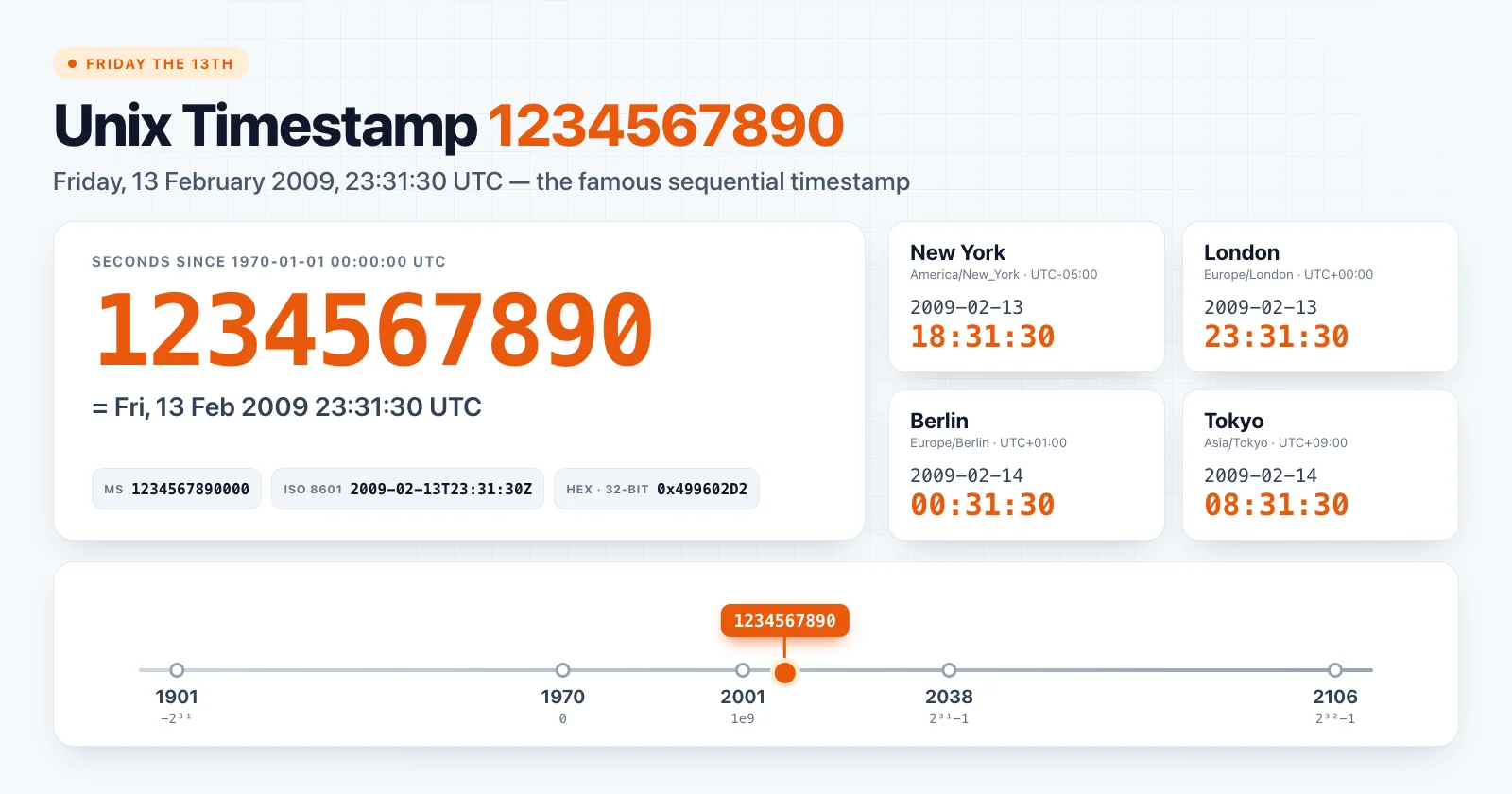
Unix Timestamp 1234567890: Friday the 13th, February 2009
The most memorable Unix timestamp ever: 1234567890 landed on Friday the 13th in UTC and on Valentine's Day in much of the world.
Developer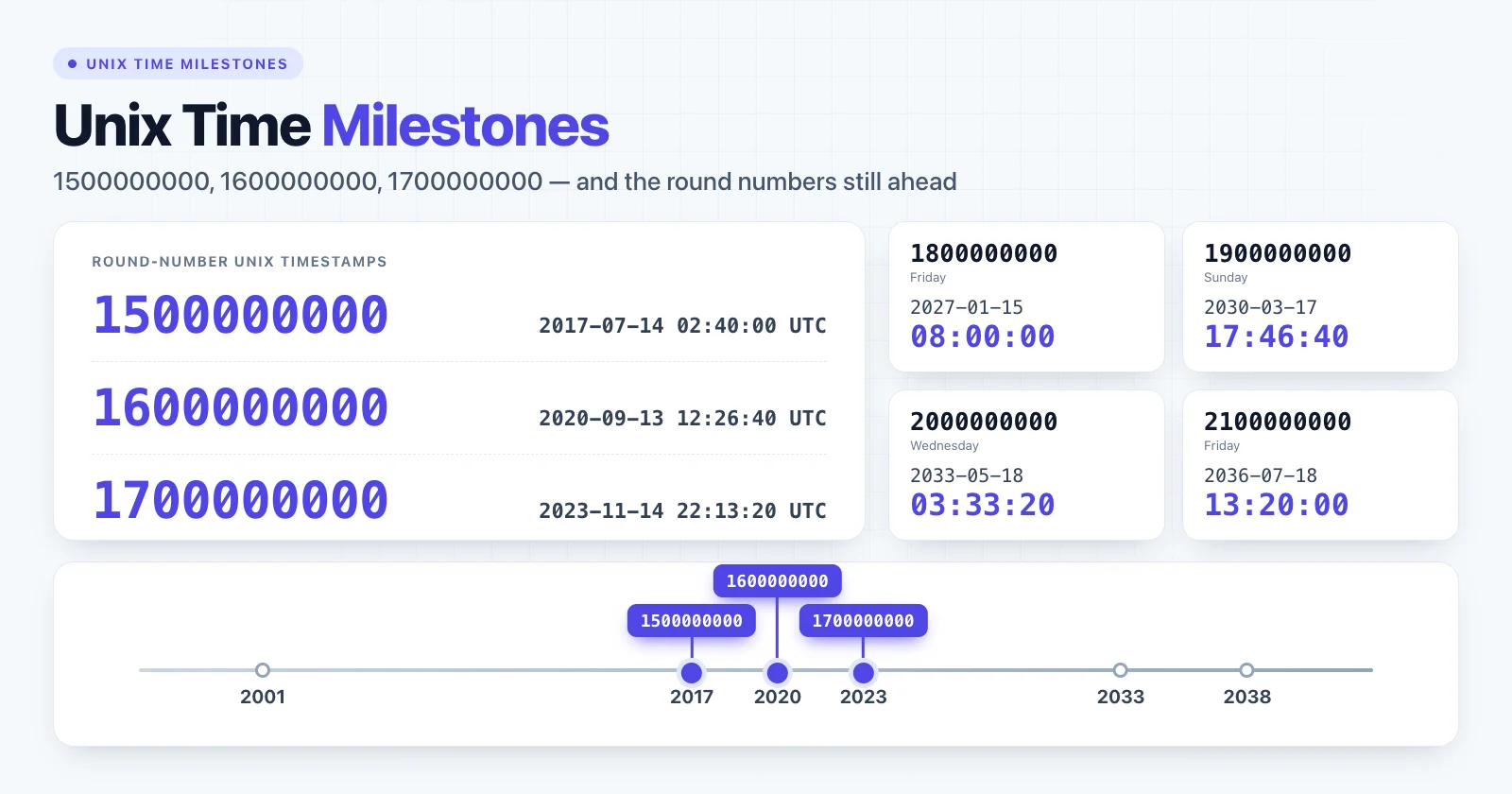
Unix Time Milestones: 1500000000, 1600000000, 1700000000 and Beyond
Every hundred million seconds, Unix time rolls over another round number. Here are the dates for 1.5, 1.6 and 1.7 billion, and what comes next.
Developer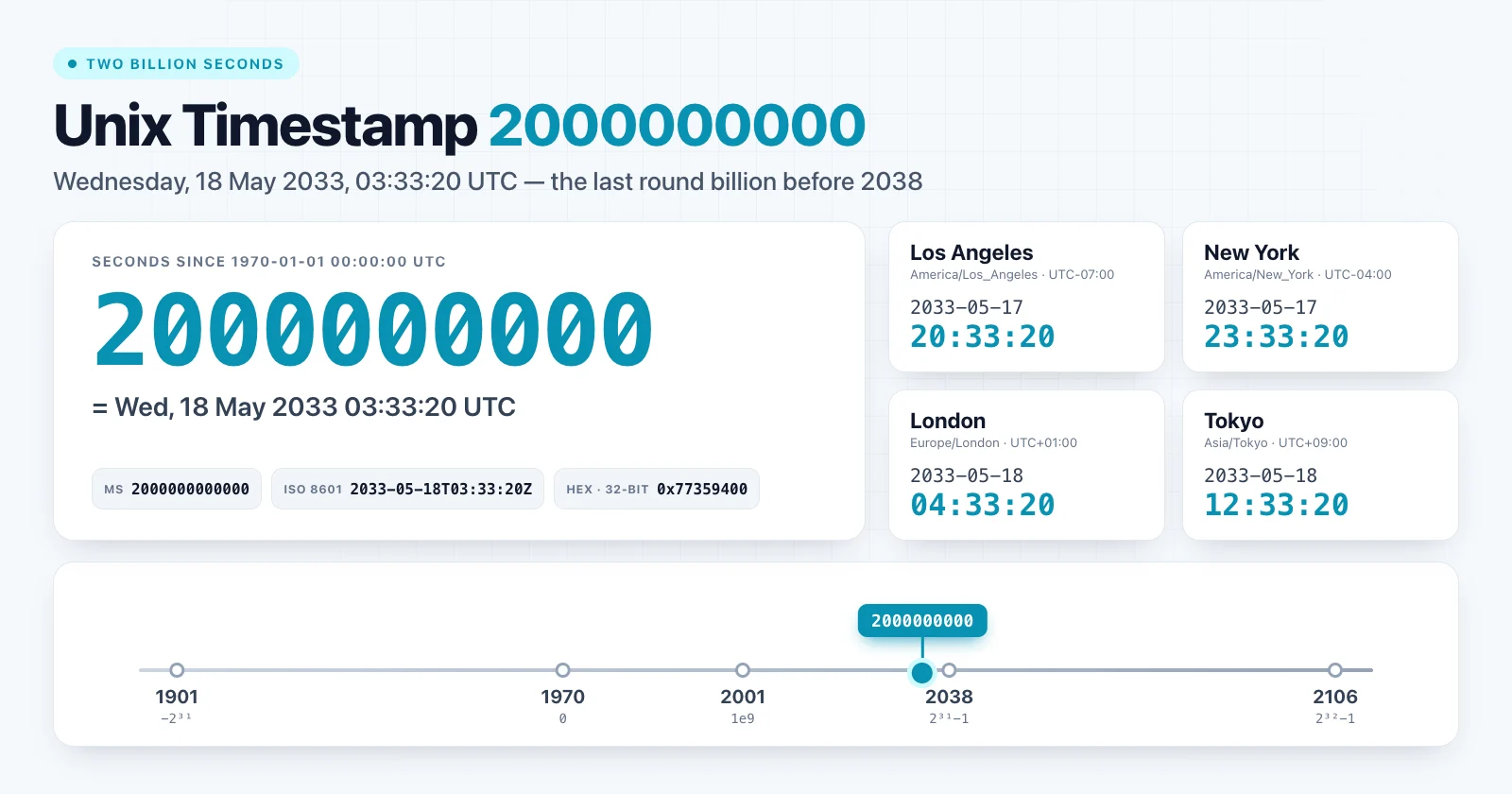
Unix Timestamp 2000000000: 18 May 2033 and the Road to 2038
Two billion seconds after the epoch is May 2033, less than five years before the 32-bit limit. For code that calculates future dates, 2038 is already here.
Developer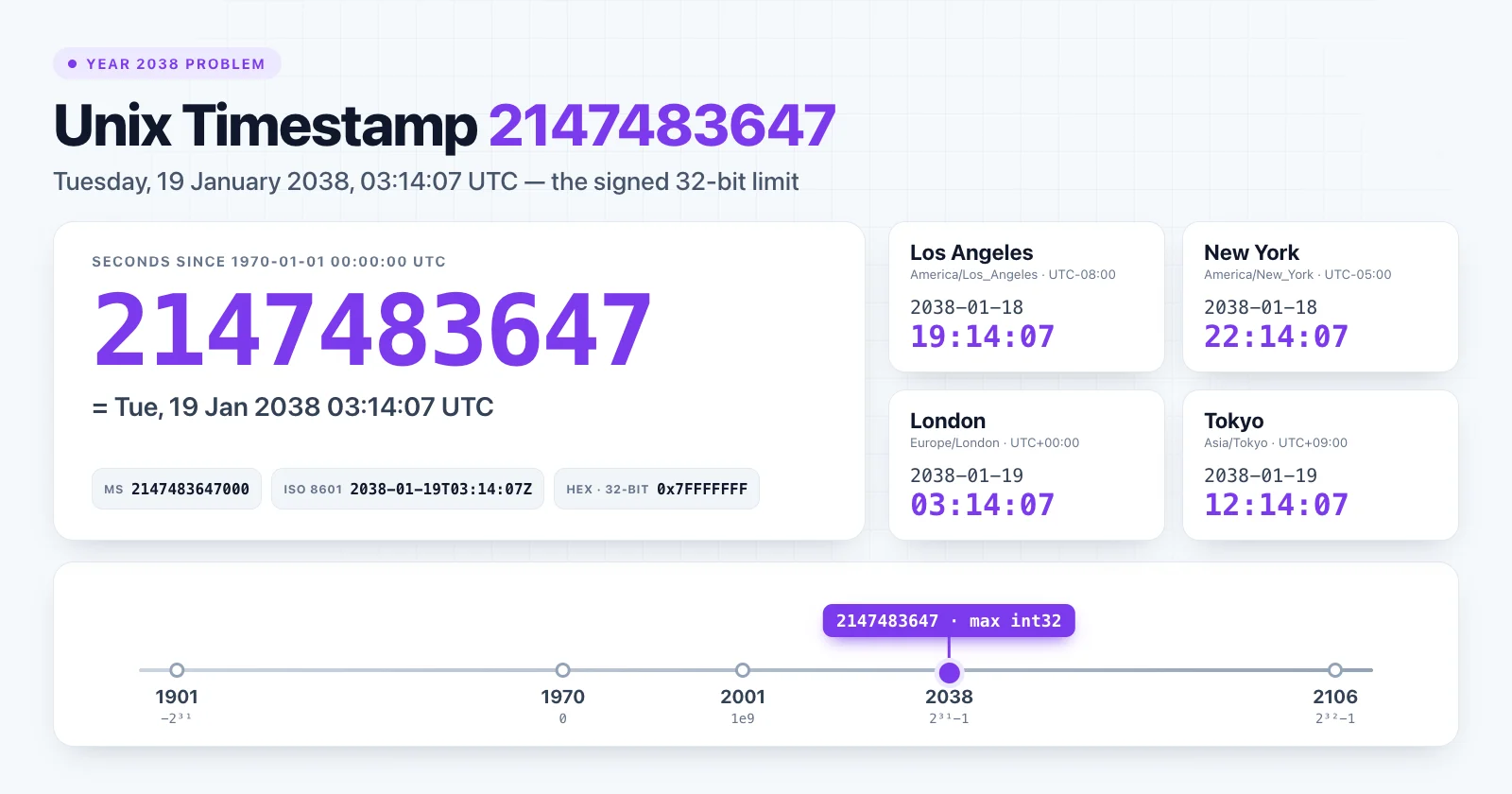
Unix Timestamp 2147483647 and the Year 2038 Problem Explained
At 03:14:07 UTC on 19 January 2038, a signed 32-bit Unix clock runs out. What happens next, what is affected, and how to find the bug before it finds you.
Developer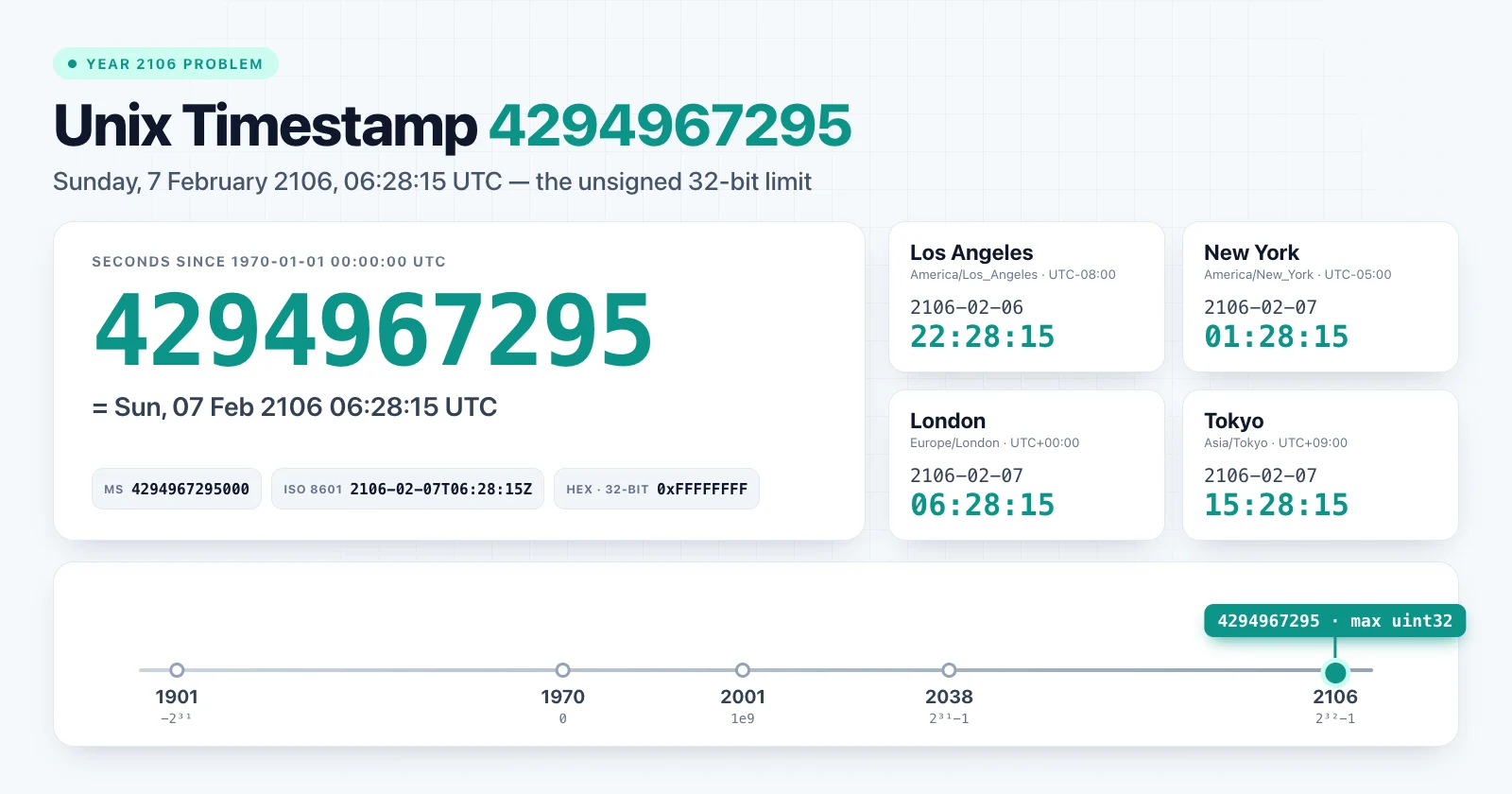
Unix Timestamp 4294967295 and the Year 2106 Problem
Switch a 32-bit Unix clock from signed to unsigned and it lasts until 2106. Here is what 4294967295 means, and why it keeps appearing as a bogus date.
Developer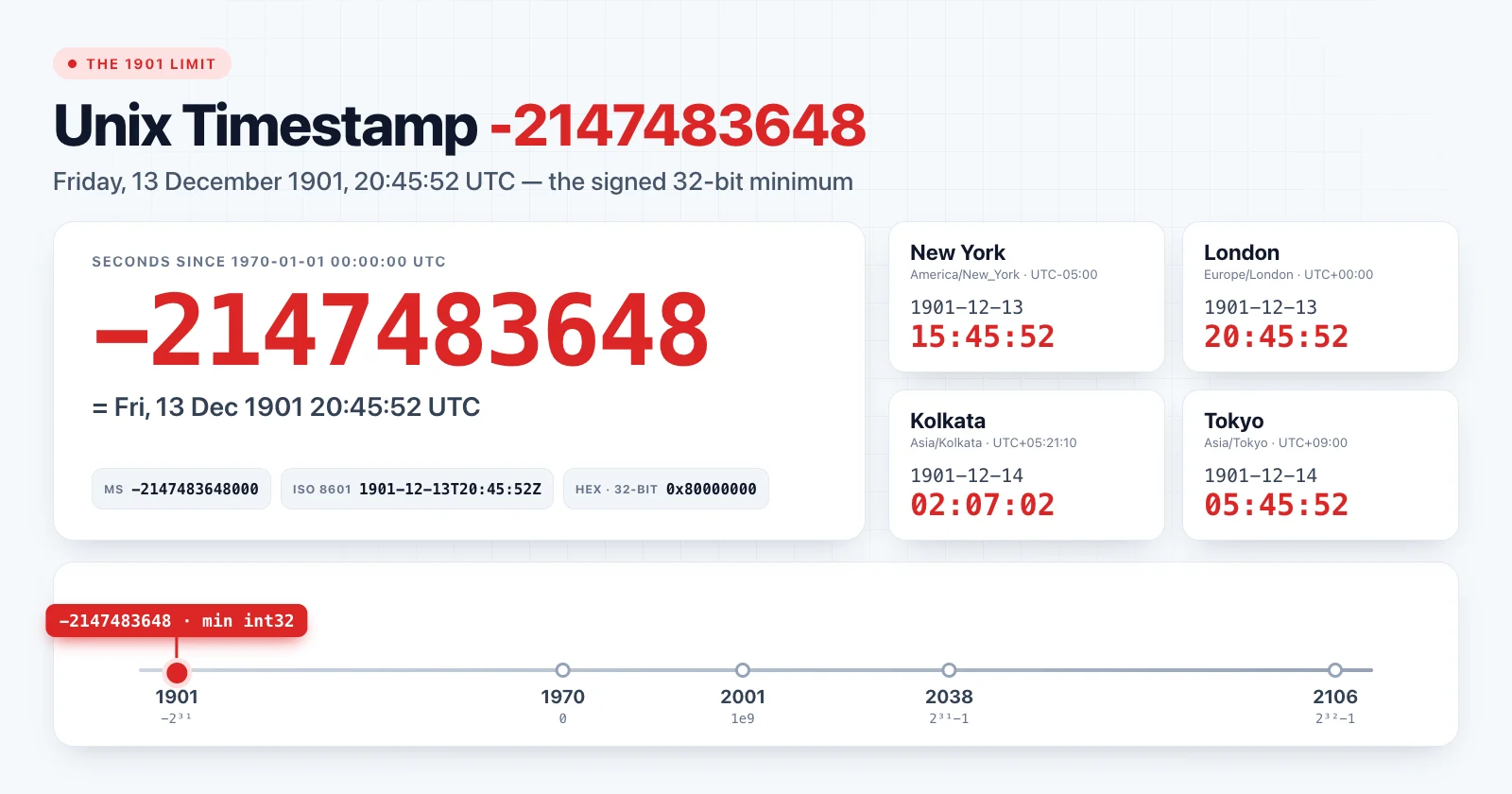
Unix Timestamp -2147483648: The 1901 Limit and Negative Timestamps
The earliest date a signed 32-bit Unix clock can reach is 13 December 1901. It is also where 2038 overflows land, and a good test of negative time.
DeveloperBlog sections
Developer
9 articlesPractical guides for developers — Unix timestamps, time zones, date formats, encoding and the everyday data-handling mistakes that cause subtle bugs.
DNS & Email
2 articlesPractical guides to DNS records, caching and propagation, and the SPF, DKIM and DMARC records that decide whether your email reaches the inbox.
IP & Network
1 articleGuides to IP addresses, Autonomous Systems and internet routing — what an IP reveals about the network behind it and how to investigate ownership.
Security
1 articlePractical security guides for developers — how SSL/TLS certificate chains work, why clients reject valid certificates, and how to fix HTTPS errors.