DNS & Email guides
Practical guides to DNS records, caching and propagation, and the SPF, DKIM and DMARC records that decide whether your email reaches the inbox.
Articles in DNS & Email
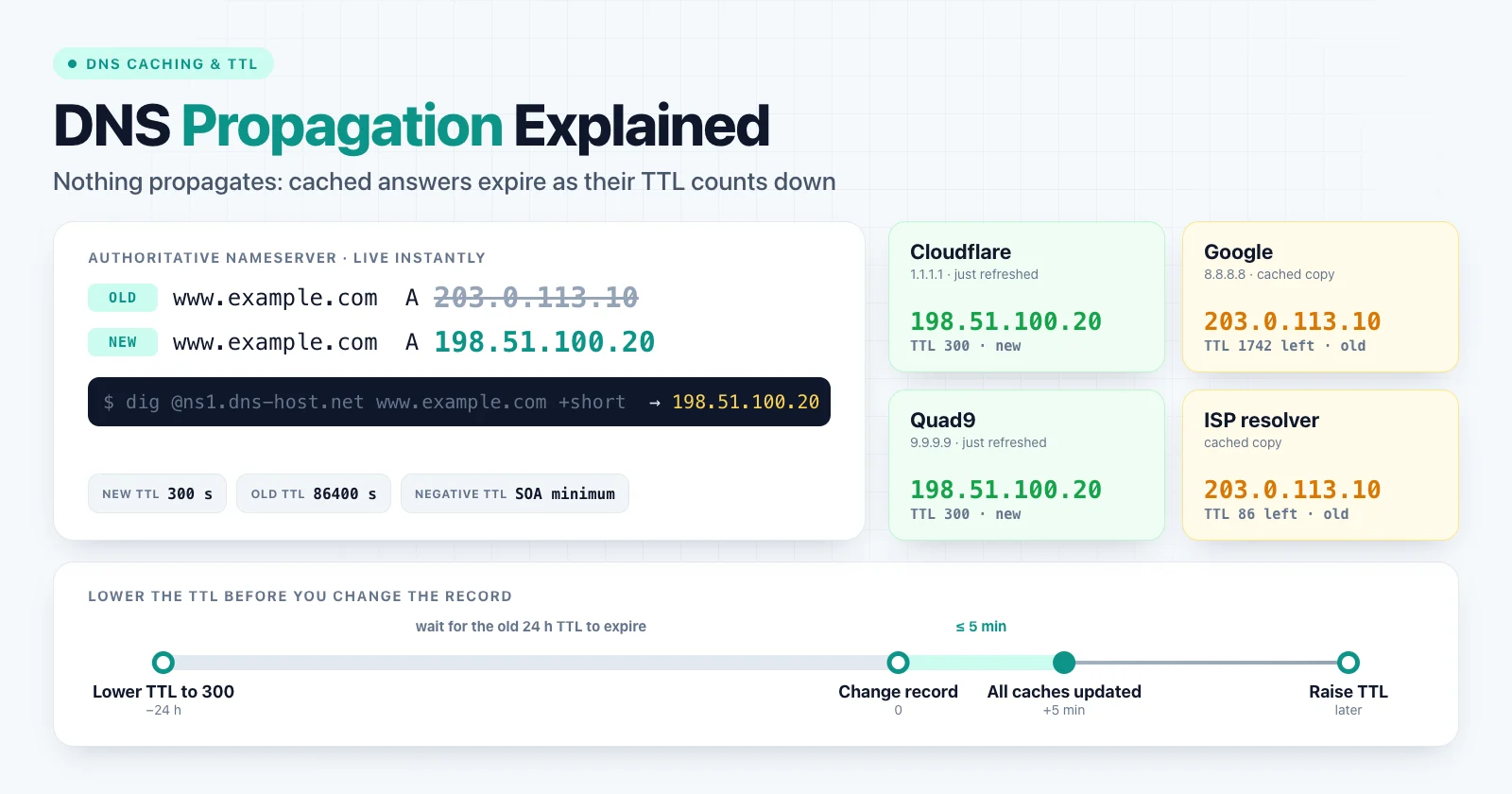
DNS Propagation Explained: Why DNS Changes Take Time and How to Check Them
Nothing actually propagates. How TTLs and caches decide when a DNS change is visible, and how to verify it properly.
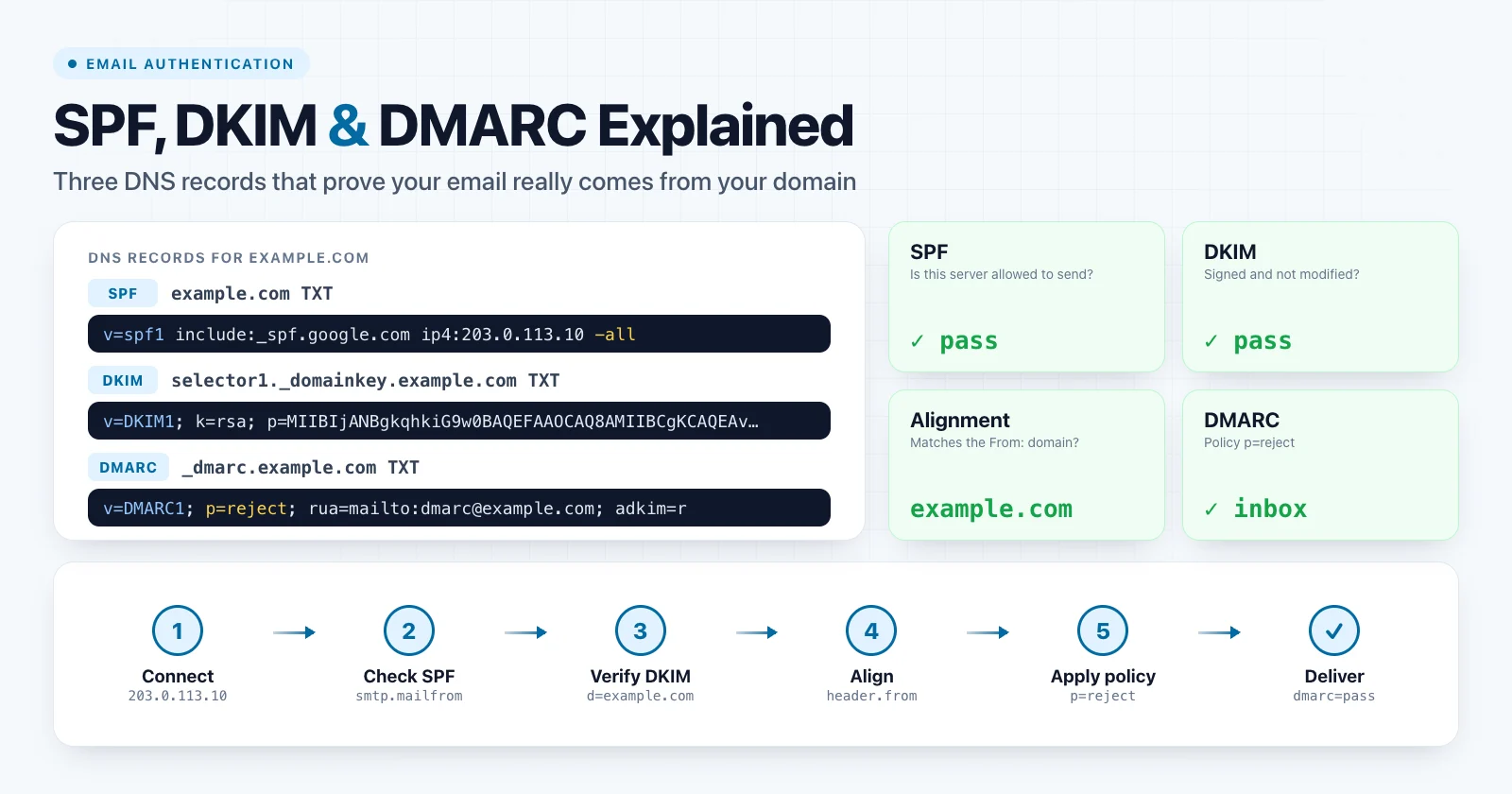
SPF, DKIM and DMARC Explained: How Email Authentication Works
The three DNS records that decide whether your email lands in the inbox, how they fit together, and how to fix them when they fail.
About this section
DNS is the layer most outages and deliverability problems trace back to, yet it is rarely explained beyond "wait 48 hours". These guides cover how resolvers cache answers, why TTLs control how quickly a change goes live, and how to confirm a record is being served correctly.
The email articles explain the three DNS records that authenticate your mail. SPF lists the servers allowed to send for your domain, DKIM signs each message, and DMARC ties both to the visible From: address and tells receivers what to do when a check fails.
To check live records while you read, use the DNS Lookup, SPF Checker, DKIM Checker and DMARC Checker.
Related tools
Other blog sections
Developer
9 articlesDeveloper guides to Unix timestamps: seconds vs milliseconds, time zones, notable epoch values such as 0 and 1234567890, and the 2038 and 2106 limits.
IP & Network
1 articleGuides to IP addresses, Autonomous Systems and internet routing — what an IP reveals about the network behind it and how to investigate ownership.
Security
5 articlesPractical guides to passkeys, WebAuthn deployment, RP IDs, app associations, and SSL/TLS certificate chains, with checklists and troubleshooting tools.