Security guides
Practical security guides for developers — how SSL/TLS certificate chains work, why clients reject valid certificates, and how to fix HTTPS errors.
Articles in Security
About this section
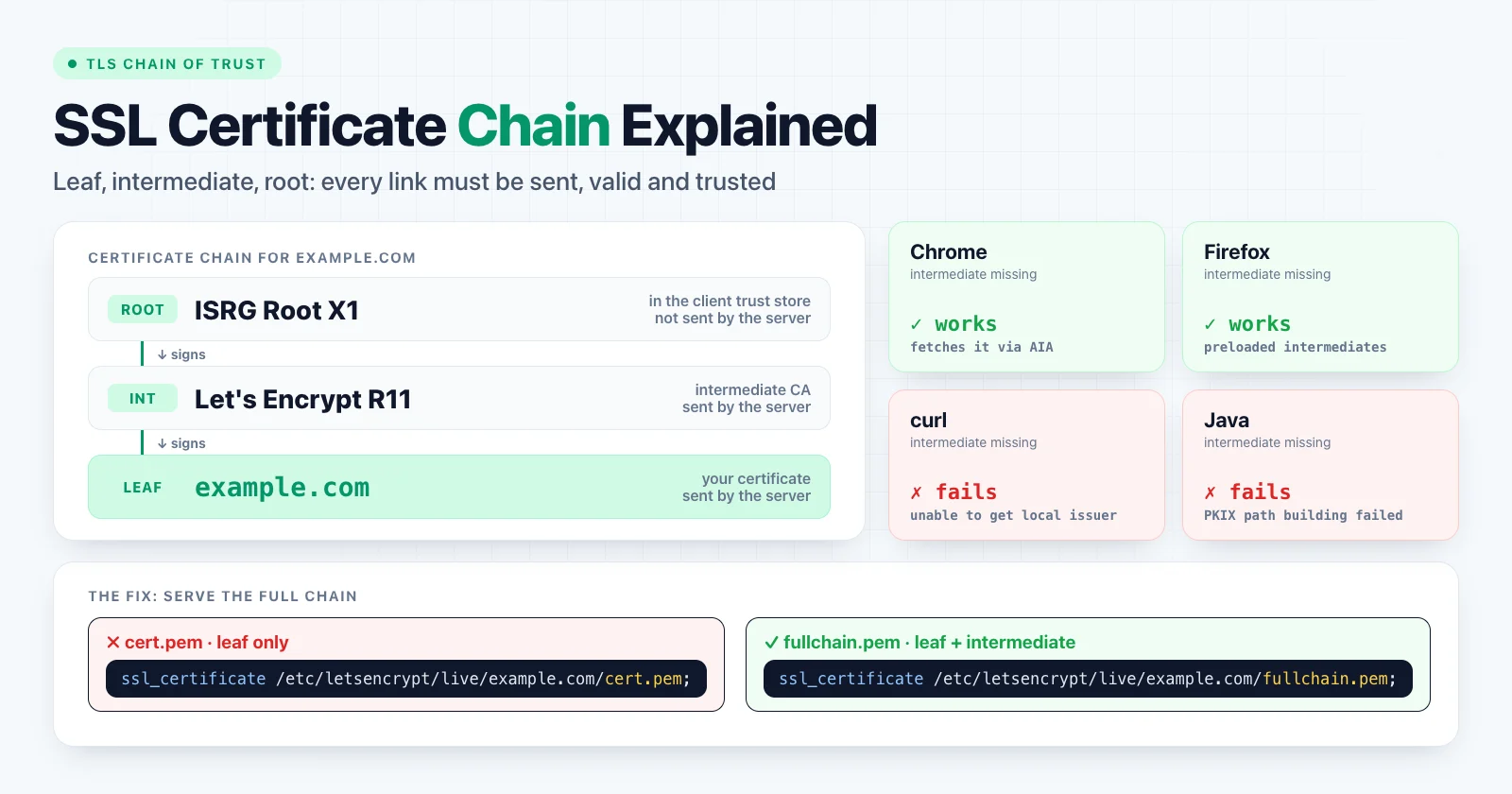
Many security errors come from configuration rather than attacks. A certificate can be valid and still be rejected because the server sends an incomplete chain, or because the certificate does not cover the hostname being requested.
These guides explain how TLS trust works in practice: how root, intermediate and leaf certificates link together, how clients validate them, and why the same site can load in a browser but fail from curl, a mobile app or an API client.
To inspect a live host, use the SSL Certificate Checker. The Hash Generator is useful when you need to compare fingerprints or checksums.
Related tools
Other blog sections
Developer
9 articlesPractical guides for developers — Unix timestamps, time zones, date formats, encoding and the everyday data-handling mistakes that cause subtle bugs.
DNS & Email
2 articlesPractical guides to DNS records, caching and propagation, and the SPF, DKIM and DMARC records that decide whether your email reaches the inbox.
IP & Network
1 articleGuides to IP addresses, Autonomous Systems and internet routing — what an IP reveals about the network behind it and how to investigate ownership.